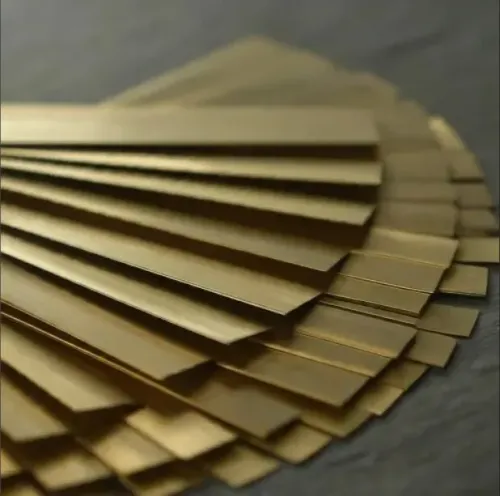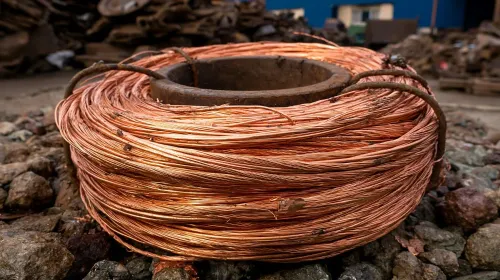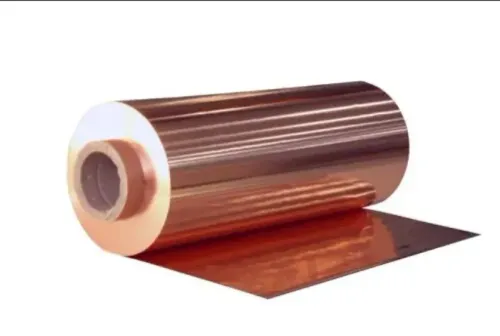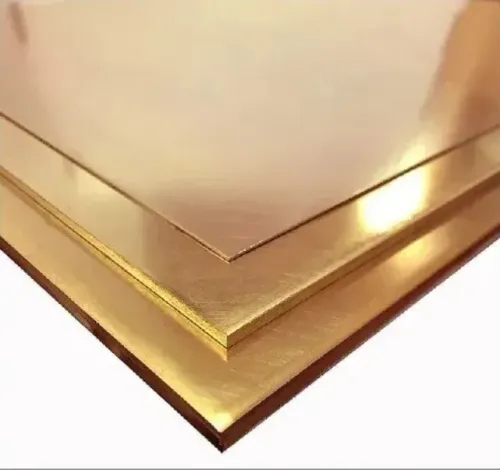
A grounding-component buyer in Mumbai must solve two problems at once: find material that is actually available, and prove that its alloy, dimensions and joint design suit the electrical duty. By the end, you will know which supplier questions to ask, when brass foil is appropriate, and how to compare quotations without confusing decorative foil with industrial stock.
Key takeaways
- Ask for alloy grade, temper, thickness, width and slit tolerance.
- Compare brass foil prices by kilogram, thickness, width and delivered condition.
- Use brass for grounding only after checking conductivity, current and corrosion requirements.
- Inspect thickness, surface condition, edge quality and batch documentation on arrival.
Which Mumbai suppliers actually stock industrial brass foil?
Actual industrial brass foil stock is most likely found through Mumbai’s non-ferrous metal stockists, rolled-metal distributors and precision slit-strip converters, including supplier clusters around Masjid Bunder, Lohar Chawl and Kalamboli.
A listing for brass foil in Mumbai does not prove local availability: the quote may cover imported coil, domestic mill stock or material slit after you order.
| Supplier type | What it usually offers | What to confirm |
|---|---|---|
| Non-ferrous stockist | Brass coil, sheet or strip | Alloy, stock balance and dispatch location |
| Rolled-metal distributor | Mill-produced C26000 or C26800 material | Certificate, width and temper |
| Slit-strip converter | Narrow widths for terminals or formed parts | Burr, camber, tolerance and tooling lead time |
| Electrical-material supplier | Conductive tape, shims or small quantities | Whether it is industrial foil or adhesive tape |
| Hardware or craft market | Decorative foil and general thin sheet | Do not assume manufacturing grade |
Ask a brass foils supplier in Mumbai for the exact thickness in millimetres or micrometres, actual coil or sheet width, width tolerance, available quantity, dispatch address and confirmed lead time. Also request the alloy certificate, batch number, temper, surface finish, edge condition and packaging details.
Foil, shim and tape are not interchangeable names. Decorative craft foil lacks traceability; adhesive-backed brass tape adds an adhesive layer; unverified thin sheet can have uncontrolled thickness and burrs. For grounding components, industrial brass foils arrive identified by batch and packed for fabrication, not loose in retail rolls.
Ask directly: “Is this quantity physically in Mumbai, or will you arrange and slit it after purchase?”
Is brass foil suitable for your grounding or bonding component?
Brass foil belongs in a grounding or bonding assembly only when its section, joints and mechanical duty have been designed together. Grounding connects equipment to earth; bonding equalises potential between conductive parts. Suitable uses can include flexible bonding straps, contact pieces, shielding parts, terminal shims and formed connector components.
| Option | Electrical and mechanical trade-off | Suitable use |
|---|---|---|
| Brass foil | C26000 is about 28% IACS, with useful formability, spring behaviour and contact durability | Formed contacts, shims and selected bonding parts |
| Copper foil | Near 100% IACS for commercially pure copper, with lower resistance at equal dimensions | Compact current paths and low-resistance connections |
| Copper braid | Highly flexible, but needs protected, properly terminated ends | Vibration, movement and repeated bending |
| Copper earthing strip | Strong, low-resistance protective conductor with less flexibility | Fixed grounding paths and fault-current duty |
Check these design inputs before selecting brass:
- Continuous current and prospective fault current
- Cross-sectional area and the narrowest section
- Joint resistance, contact pressure and fastener or crimp design
- Mechanical load, bend radius, vibration and required flexibility
- Humidity, contamination, dissimilar-metal contact and corrosion exposure
A narrow foil or poorly prepared bolted or crimped joint can control resistance more than the alloy label. A thin brass foil is not a substitute for a designed protective earthing conductor or a finished connection component demonstrated against IEC 62561-1 where that standard applies.
Start with the circuit and joint design, not the phrase buy brass foils.
Which brass foil specification and price basis should you request?
Request a grade-specific quotation, not simply “brass foil price.” Name C26000 70/30 brass or C26800 65/35 brass, then state:
- Thickness and tolerance; width and width tolerance
- Supplied length or coil mass; temper designation
- Surface finish, flatness and maximum edge burr
- Packaging, coil ID and batch or heat traceability
Choose annealed or another soft temper when the foil must fold around a terminal. Choose a harder temper for springback and strength, but check the minimum bend radius because tight forming can cause cracks.
State the mating metal, humidity, salt or industrial contamination, joint finish, plating requirement and barrier-washer requirement. Bare brass against dissimilar metals can develop galvanic corrosion, especially in a damp joint.
Compare offers using both price per kilogram and price per square metre. Calculate mass from actual thickness, width, supplied mass and the alloy density stated by the supplier; do not equate an unexplained gauge with a thickness. Ask the quotation to separate:
- Metal value
- Slitting, tooling and testing
- Minimum-order quantity
- Freight and taxes
| Form | Best fit | Main trade-off |
|---|---|---|
| Brass foil | Thin, flexible formed parts | More handling and edge-control risk |
| Brass sheet | Rigid cut components | Less flexible |
| Brass shim stock | Precise spacing or adjustment | Not always supplied in long coils |
| Brass coil | Repeated production lengths | Requires suitable feeding and slitting |
The right form depends on thickness, flexibility, geometry, length and production volume—not the word “foil.”
How should you vet a brass foil supplier in Mumbai before ordering?
Vet a brass foils supplier in Mumbai by verifying production route, documents, physical stock and delivery terms—not by accepting a catalogue name.
1. Ask whether the material is mill-produced strip slit to order or a converted stock item. Slitting can create edge burrs, camber and width variation, which can prevent reliable seating under terminals, clamps and formed grounding parts.
2. Request an alloy certificate or mill test certificate, thickness and width readings, temper evidence where relevant, surface and edge photographs, batch traceability and the available parent-coil width. These checks separate industrial brass foils from decorative foil, tape or unverified thin sheet.
3. Confirm the dispatch location, lead time and actual stock balance. Ask for a dated stock statement or coil identification; “available” can otherwise mean imported material or strip arranged only after your purchase order.
4. Send a one-page enquiry containing the component drawing, alloy, thickness and tolerance, width and tolerance, temper, finish, burr limit, flatness, quantity, coil or length requirement, inspection documents and delivery address. R Mahaveerchandra & Co. is one Mumbai supplier you can include in this comparison, provided it confirms each missing technical and commercial field.
5. Require the quotation to separate metal value, slitting, tooling, minimum-order quantity, freight, taxes and testing. Narrow slit widths, small coils, tight tolerances and low-volume custom work increase conversion waste and raise the delivered price, even when the kilogram rate appears competitive.
Related product
 | Brass R. Mahaveerchandra & Co. R. Mahaveerchandra & Co. offers premium quality Brass Foils manufactured using high-grade raw materials to ensure excellent... View product → |
What should you inspect when the brass foil arrives?
Reject the shipment from fabrication until the receiving check confirms that the brass foil in Mumbai matches the purchase order. Do not compare only the invoice total: a quoted brass foil price means little without grade, dimensions, temper and traceability.
- Confirm supplier identity, batch or heat number, alloy certificate or mill test certificate, and coil or bundle identification.
- Measure thickness at several points across the coil or sheet, then record width readings at several locations.
- Verify supplied length or mass, temper evidence, surface finish, flatness, packaging and edge-burr condition against the order.
- Record camber or width variation from slitting; an edge that catches under a terminal or clamp can raise joint resistance.
A portable alloy analyser can screen whether the material resembles C26000 or C26800 brass, but it cannot verify thickness, temper, electrical resistance, flatness or joint performance. For a formed connector or bonding strap, test bend behaviour, springback, cracking at the specified radius and fit beneath the terminal or clamp.
| Inspection target | What the check proves | What it does not prove |
|---|---|---|
| Raw foil composition | The alloy reading matches the documented grade | Compliance as a finished earthing component |
| Electrical joint | Contact area, fastener loading, plating, barrier washers and clean surfaces are adequate | That the foil alone has acceptable resistance |
| Finished component | The design performs under its current duty and applicable requirement, including IEC 62561-1 where relevant | That any untested raw foil is compliant |
Accept the foil only when documented grade, dimensions, temper, joint and current duty align. Choose copper foil, braid, strip or another brass form when resistance, flexibility, load or corrosion exposure makes brass unsuitable.
Frequently asked questions
Which Mumbai suppliers stock industrial brass foil?
Look among non-ferrous metal stockists, rolled-metal distributors and precision slit-strip converters in areas such as Masjid Bunder, Lohar Chawl and Kalamboli. Confirm current stock, rather than relying on a catalogue listing.
Is brass foil suitable for grounding or bonding components?
Check electrical conductivity, current capacity, mechanical strength, corrosion exposure and galvanic compatibility with connected metals. Brass is not automatically the best choice; copper may offer higher conductivity, while brass can provide greater stiffness or wear resistance.
Which brass foil specification and price basis should you request?
State the alloy grade, temper, thickness, width, coil or sheet form, length, quantity, edge condition and tolerance. Ask whether the brass foil price is per kilogram, metre or piece, and confirm freight, taxes, slitting and minimum-order charges.
How should you vet a brass foil supplier in Mumbai?
Request a sample, material test certificate, batch number, dimensional tolerances, delivery condition and references for comparable industrial orders. Verify that the supplier can maintain your required thickness, width and slit-edge quality.
What should you inspect when brass foil arrives?
Match the packing label and certificate to your purchase order, then measure thickness and width. Check the surface for dents, oxidation, stains and scratches, and inspect coil winding, burrs, cracks and damaged edges before acceptance.
Keywords