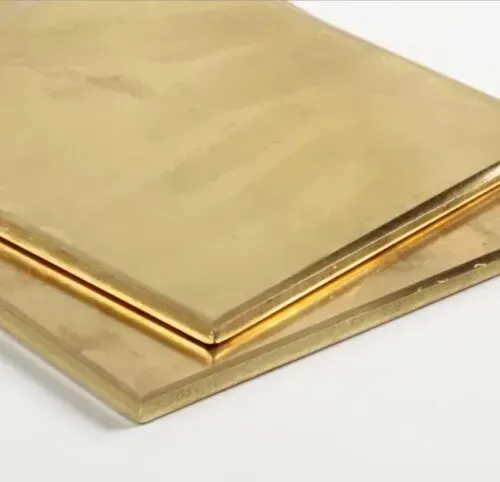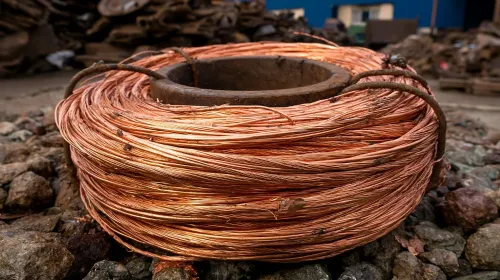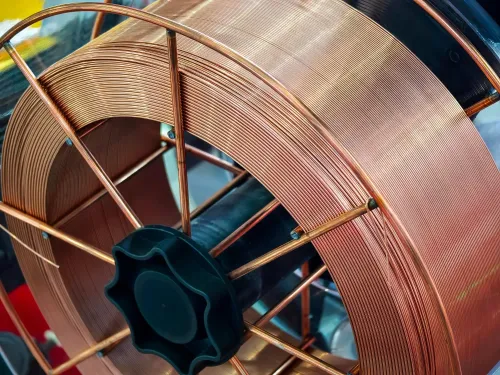
Excessive voltage drop, hot joints and uneven current distribution usually result from an undersized conductor, a poor connection or inadequate heat removal—not from copper’s conductivity rating alone. You will be able to relate sheet dimensions to resistance and heating, evaluate joints and installation conditions, and specify a copper sheet that suits the electrical, mechanical and thermal demands of the finished assembly.
Key takeaways
- Diagnose voltage drop, hot joints and uneven current separately before selecting copper.
- Calculate current capacity from cross-sectional area, not thickness alone.
- Reduce overheating with clean, wide joints and short heat paths.
- Specify copper grade, temper, dimensions, finish and test documents before purchasing.
Match the copper sheet to the actual conductivity fault
Excessive voltage drop, hot joints and uneven current distribution require different corrections. A copper sheet for industrial conductivity problems works only when its width, thickness, contact area and heat path match the fault—not when you select copper by conductivity value alone.
- Excessive voltage drop: increase the conductor’s cross-sectional area with a wider or thicker sheet, shorten the current path, and remove unnecessary bends or narrow necks. Resistance follows R = ρL/A, so a longer path raises drop while greater area reduces it. Check the resistance at the operating temperature, not only at 20 °C.
- Hot joints: do not solve a poor connection by adding copper elsewhere. Use broad, flat mating surfaces, correct hole and fastener geometry, clean contact faces and sufficient clamping pressure. Burrs, oxidation, paint and loosened fasteners concentrate current at small spots, creating heat even when the sheet itself has excellent conductivity.
- Uneven current distribution: give parallel paths similar lengths, widths, bends and joint resistance. A bus link that is much narrower on one side forces more current through the remaining path, while unequal contact pressure makes one connection run hotter. Use matched sheet sections or laminated conductors where flexibility, field distribution or heat dissipation matters.
For grounding plates, shielding and bonding, low impedance and reliable contact can matter more than maximum current capacity. For transformer, motor and battery connections, inspect the finished cut part: punching, drilling and bending can reduce contact area or introduce distortion that the incoming material certificate cannot reveal.
Calculate cross-sectional area before choosing thickness
For a copper sheet for electrical problems, calculate area before selecting thickness: A = width × thickness. A 100 mm-wide sheet at 3 mm thick has 300 mm² of conducting area, while a 50 mm-wide sheet at 6 mm thick has the same area and, for a straight uniform run, similar bulk resistance.
Use R = ρL/A, where ρ is copper resistivity, L is conductor length and A is area. Check voltage drop with V = I × R and conductor heating with P = I²R. For a maximum permitted resistance, calculate A = ρL/Rmax, then select practical width and thickness.
| Change | Electrical effect | Design consequence |
|---|---|---|
| Increase width | Increases area and reduces resistance | Helps spread heat and current across a joint |
| Increase thickness | Increases area and reduces resistance | Adds stiffness and heat capacity, but may complicate bending |
| Increase current | Raises voltage drop and heating; heating rises with I² | A previously acceptable sheet can overheat quickly |
- Start with the required current and length.
- Calculate the minimum area from resistance or voltage-drop limits.
- Check the resulting temperature rise against ambient temperature, enclosure, airflow, orientation and nearby conductors.
- Add contact and joint resistance; a low-resistance sheet does not prevent a hot bolted connection.
There is no universal ampere rating per millimetre of thickness. The same sheet needs different area in open air, a sealed switchboard, or a crowded laminated assembly.
Design the joints and heat path, not just the conductor
A copper sheet with excellent datasheet conductivity can still overheat at a bolted joint, where contact resistance concentrates power at the current entry point. Oxide or tarnish, contamination, burrs, low contact pressure, insufficient overlap and loose fasteners reduce the real conducting area. The datasheet describes the metal, not the finished connection.
Control the joint and heat path with these design decisions:
- Clean and prepare both contact faces; remove burrs without reducing the overlap area.
- Specify adequate overlap, flatness, contact area and fastener torque, then verify torque during inspection.
- Keep the joint away from heat-sensitive insulation and provide a short, low-resistance path into a larger bus, chassis or cooling surface.
- Check the finished cut part, because punching, drilling, shearing and bending can distort the contact region even when the incoming sheet passed inspection.
- Size the assembly for its permissible temperature rise, not for a universal “amps per millimetre” rule.
Across copper sheet conductivity applications, copper resistivity rises about 0.39% per °C near 20°C. Require the conductivity or resistivity test temperature and correction basis on the mill certificate, then evaluate the actual ambient temperature, enclosure and airflow. A closed cabinet can produce a hotter sheet than an open test setup.
For high-current parts, compare the heat or lot certificate with the cut component and measure joint temperature under load; a cool sheet cannot compensate for a hot connection.
Choose grade, temper and form for the operating environment
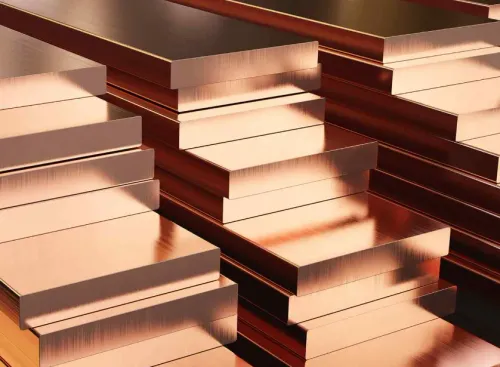
Choose C11000 sheet for standard switchgear links, grounding plates, transformer connections and battery collectors: it offers about 100% IACS conductivity, good formability and solderability. Select another grade when the environment, not conductivity alone, controls failure risk.
| Choice | What it means | When it applies |
|---|---|---|
| C11000 | Electrolytic tough-pitch copper with high conductivity | General industrial copper sheet uses, including bus links, bonding plates and fabricated contacts |
| C10100 or C10200 OFHC copper | Low-oxygen copper with reduced hydrogen-embrittlement risk | High-temperature, vacuum or hydrogen-containing service |
| Annealed temper | Soft, highly formable material | Deep bends, formed contact parts and complex profiles; support it against distortion |
| Hard or half-hard temper | Higher yield strength and better resistance to handling damage | Drilled plates, bolted joints and parts that must hold flatness under load |
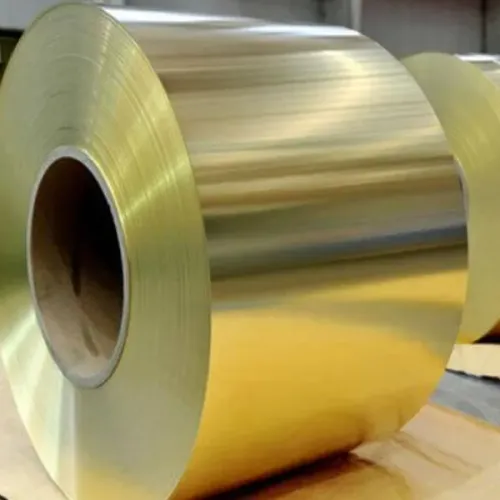
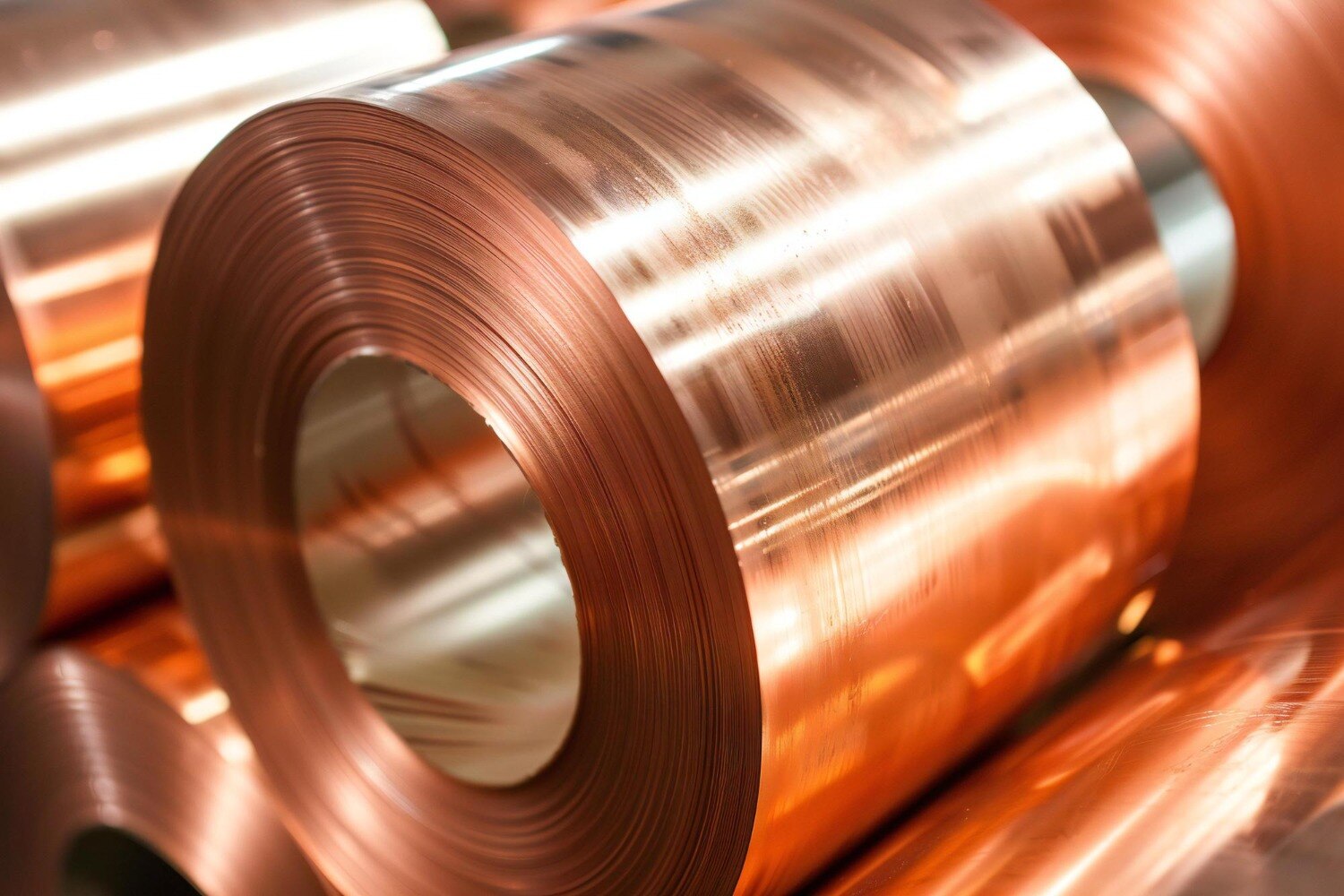
| Strip, foil, busbar or braid | A conductor form matched to the movement, spacing or heat path | Use strip for repeated bends, foil for shielding, busbar for rigid high-current paths and braid for vibration |
Do not specify “99.9% copper” alone. State the UNS grade, temper, thickness, width, length or coil form, surface condition and dimensional tolerances.
Require conductivity or maximum resistivity at a stated reference temperature, such as 20°C. Copper resistance rises about 0.39% per °C near that point, so a room-temperature pass can become a hot-service failure.
Turn the design into a verifiable purchase specification
Give the supplier a purchase specification that lets you inspect both the incoming sheet and the finished conductor, not merely confirm “99.9% copper.” State:
- UNS grade, such as C11000, temper, and the governing standard: ASTM B152/B152M for sheet, or the applicable EN or IS specification.
- Thickness, width, length or coil form, dimensional tolerances, flatness, straightness, and permitted edge condition.
- Surface condition, including oxide, scale, scratches, stains, burr limits, and whether bright or mill finish is required.
- Minimum conductivity in % IACS or maximum resistivity, with the test temperature, reference basis, and temperature correction stated.
- Heat or lot number, composition certificate, conductivity or resistivity result, and material certificate tied to the delivered batch.
- No-alloy-substitution instruction unless you approve it in writing; higher strength does not prove equal conductivity.
A copper sheet supplier in mumbai should also receive the drawing or cut-part schedule: hole diameters and positions, bend radius, cutouts, contact faces, allowable burr height, and required deburring. ASTM B187/B187M is a more direct reference when the part is specified as copper bus bar, rod, or shape rather than generic sheet.
Check the certificate against the actual cut part where practical. Shearing, punching, drilling, bending, and local heating can reduce contact area or distort alignment; controlled cleaning, deburring, and contact preparation belong in the acceptance criteria. R Mahaveerchandra & Co. can be evaluated against these measurable fields rather than a catalogue description.
Related products
 | Copper R. Mahaveerchandra & Co. R. Mahaveerchandra & Co. offers premium quality Copper Sheets manufactured using high-grade copper material to ensure... View product → |
 | Copper R. Mahaveerchandra & Co. R. Mahaveerchandra & Co. offers premium quality Copper Foil manufactured using high-grade copper for excellent electrical... View product → |
Frequently asked questions
How do you match copper sheet to a conductivity fault?
Separate voltage drop, hot joints and uneven current distribution first; each fault requires a different correction in conductor size, contact design or current path.
How do you calculate copper sheet thickness?
Calculate the required cross-sectional area from current and allowable current density, then select thickness after fixing the available sheet width.
Why do copper sheet joints overheat?
Small contact areas, contamination, poor clamping and long heat paths increase resistance and create hot joints even when the copper conductor is adequately sized.
Which copper grade, temper and form should you choose?
Choose grade, temper and sheet, strip, plate or bus-bar form according to conductivity, forming requirements, mechanical loading, corrosion exposure and operating temperature.
What belongs in a copper sheet purchase specification?
State copper grade, temper, thickness, width, length, tolerances, surface condition, quantity, applicable standard, inspection requirements and required test documents.
Related products
 | Copper R. Mahaveerchandra & Co. R. Mahaveerchandra & Co. is a trusted supplier and stockist of premium quality Copper Strips manufactured using high-grade... View product → |
 | Copper R. Mahaveerchandra & Co. R. Mahaveerchandra & Co. offers premium quality Copper Shims Sheets manufactured using high-grade copper for superior... View product → |
 | Copper R. Mahaveerchandra & Co. R. Mahaveerchandra & Co. offers premium quality Copper Earthing Strips manufactured using high-grade copper for excellent... View product → |
 | Copper R. Mahaveerchandra & Co. R. Mahaveerchandra & Co. offers premium quality Copper Earthing Wire manufactured using high-grade copper for superior... View product → |
Keywords