Panel manufacturers must choose more than a nominal copper cross-section: the conductor’s construction, fault-duty performance, routing and termination all affect protective continuity. By the end, you will be able to separate panel bonding from electrode earthing, compare wire formats and specify a complete conductor-and-connection system for Mumbai conditions.
Key takeaways
- Size panel PE conductors from prospective fault current and clearing time.
- Use insulated flexible copper wire for internal panel protective connections.
- Separate panel bonding wires from electrode conductors and earth bars.
- Specify copper grade, insulation, stranding, finish and test documents in writing.
Separate the panel PE wire from strips, bus bars and electrode conductors
Use an insulated, flexible copper PE wire for internal panel protective connections; use a copper strip or bus bar for the common earth bar; keep the conductor running to the building electrode as a separately designed circuit. Do not replace an electrode conductor with a small panel bonding wire.
| Role | Preferred conductor | What it must achieve |
|---|---|---|
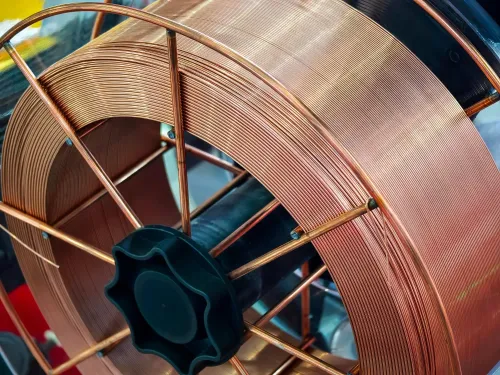
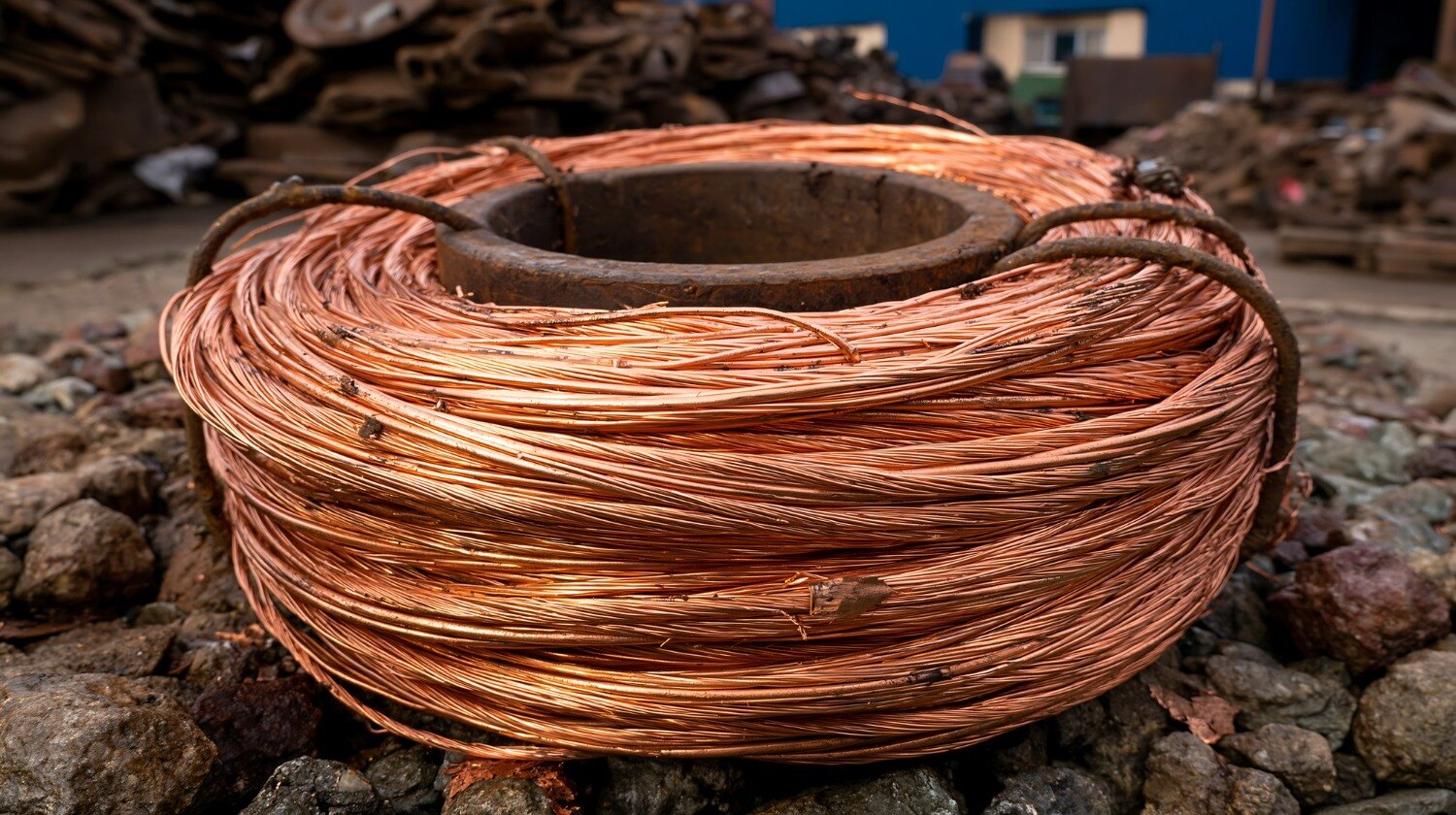
| Panel PE links | Insulated stranded copper wire, often IEC 60228 Class 5 | Connect breakers, contactors, drives and other exposed conductive parts to the PE bar |
| Enclosure, gland plate and door bonds | Flexible copper wire with suitable lugs or a purpose-made bonding braid | Maintain continuity across hinges, paint, powder coating and removable joints |
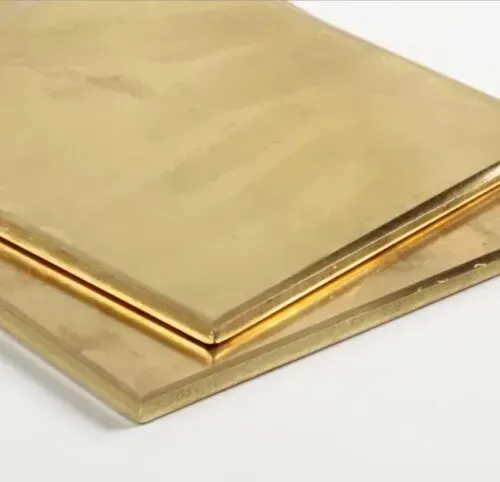
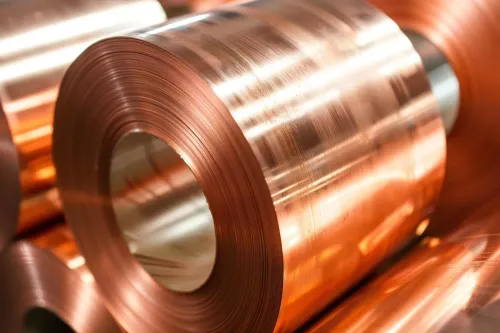
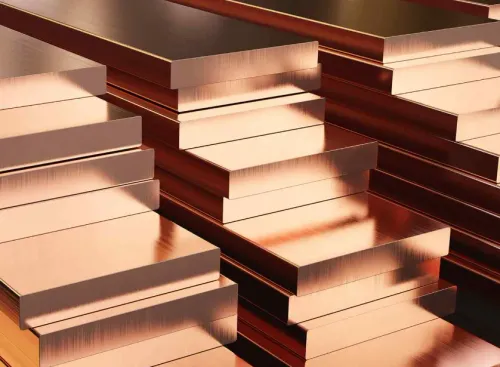
| PE bar or earth bar | Copper strip or copper bus bar drilled for approved terminals | Provide a robust common connection and withstand the panel’s fault duty |
| Electrode conductor | Copper cable, strip or tape selected for the installation and electrode arrangement | Carry fault current outside the panel and tolerate mechanical damage and corrosion risks |
A copper bus bar is not automatically a better door bond: it can restrict movement and loosen at a hinge. Conversely, a fine-stranded copper grounding wire for panels needs ferrules, lugs or terminals rated for Class 5 conductors; equal cross-sectional area does not guarantee clamp compatibility.
Specify copper earthing wire in Mumbai by conductor class, insulation, termination system and fault duty, not by diameter alone. Keep functional-earth and lightning-protection conductors separate unless the design standard explicitly permits a common arrangement.
Paint or oxide at a bonding joint can leave a dangerous high-resistance path, so prepare contact surfaces or use approved bonding hardware and verify continuity after assembly.
Choose copper earthing wire sizes from fault duty, not load current alone
Nominal panel load current sizes the phase conductors; it does not establish adequate copper earthing wire sizes. Determine the protective conductor from the prospective fault current at the panel, the protective device’s clearing time, and the conductor’s installation conditions.
For a copper PE, use the applicable installation standard and verify this reference relationship:
| Phase-conductor cross-section | Copper PE reference cross-section |
|---|---|
| Up to 16 mm² | S |
| Above 16 to 35 mm² | 16 mm² |
| Above 35 mm² | S/2 |
Here, S is the phase-conductor area. Apply the table only where the governing installation rules permit it; otherwise use the adiabatic calculation, S_PE = I√t/k. I is the fault current, t is disconnection time, and k depends on copper, insulation temperature and conductor construction.
Check the result against the actual assembly:
- Confirm the upstream device interrupts the prospective short-circuit current within the calculated time.
- Verify the wire, ferrule, lug and earth-bar terminals withstand the fault duty and accept the conductor class.
- Record the PE route, tightening requirements and continuity or short-circuit verification for the completed panel under IEC 61439.
Do not use a small panel PE as the conductor to an earth electrode. The electrode conductor also requires assessment for mechanical protection, corrosion exposure and the electrode arrangement; a larger wire will not compensate for a loose lug or corroded bonding interface.
Compare bare, insulated, stranded and tinned copper constructions
Choose the conductor construction by the panel’s exposure, movement and termination hardware—not by colour alone. For copper earthing wire for options in Mumbai, specify the conductor class and complete termination system alongside the nominal area.
| Option | Physical and identification features | Best fit |
|---|---|---|
| Bare copper | Exposed, easy to inspect, but vulnerable to oxidation, accidental contact and contamination | Enclosed, dry internal bonds where insulation is unnecessary |
| PVC-insulated copper | Green-and-yellow insulation identifies PE and prevents contact with live parts | General panel PE runs, door bonds and equipment connections |
| Stranded copper | Rigid stranded conductors hold shape; flexible Class 5 conductors route around hinges and tight bends | Fixed runs for rigid stranded; compact or moving connections for Class 5 |
| Tinned copper | Copper surface has a tin coating that slows oxidation at exposed or humid terminations | Coastal, chloride-exposed or frequently serviced panels |
Do not treat these as four mutually exclusive types: a wire can be flexible, PVC-insulated and tinned at the same time. Ask for IEC 60228 conductor class and actual resistance; equal cross-sectional areas do not guarantee equal flexibility or resistance.
Class 5 fine-stranded wire needs a ferrule, lug or terminal approved for fine strands. A clamp designed for rigid conductors can loosen or cut strands. Tinned copper improves surface durability, not ampacity; use compatible lug plating and prepare the bonding surface correctly. Green-and-yellow insulation aids inspection, but it cannot prove continuity.
Route and terminate every bonding link as one protective circuit
Treat the PE terminal, internal earth bar, enclosure, gland plate, doors, removable covers and bonded equipment as one protective circuit, not as separate wires that happen to meet at the bar. An oversized earth bar cannot compensate for a missing or loose link elsewhere.
At assembly, check every connection in the path:
- Bond the earth bar to the enclosure with a conductor and hardware rated for the fault duty.
- Bond each removable gland plate to the fixed enclosure; do not rely on mounting screws, paint or hinges for continuity.
- Run a flexible link from every door to the enclosure. Leave enough length for the full door swing, without sharp bends or tension.
- Bond removable covers and internal equipment frames with dedicated links where removal could interrupt continuity.
- Terminate each copper grounding wire for panels in a compatible lug, ferrule or clamp, then tighten to the manufacturer’s specified torque.
Remove paint, powder coating, anodizing and oxide films at bonding points, or use approved bonding hardware designed to penetrate the coating. Serrated washers are useful only where the hardware and assembly method permit them; check continuity after tightening.
For fine-stranded copper earthing wire, use terminals rated for its IEC 60228 conductor class. A matching cross-sectional area does not make every clamp suitable. Record copper earthing wire sizes, terminal types, torque values and the protective-conductor arrangement in the assembly file, then verify continuity and short-circuit withstand for the completed assembly under IEC 61439.
Inspect links again after transport and during service, especially where Mumbai humidity or salt contamination can corrode exposed joints.
Write a supplier specification that survives Mumbai’s humidity and inspection
Approve the purchase only after the copper earthing wire supplier completes a written schedule; “green wire” and nominal cross-sectional area are not enough for copper earthing wire in Mumbai.
1. State the conductor area in mm², copper construction, stranding and IEC 60228 class. Request the maximum conductor resistance for that area and class, not a generic conductivity claim. Specify Class 5 fine-stranded wire when tight panel bends require it.
2. Name the insulation material, colour, temperature rating and voltage rating. Reject a product whose insulation is nicked, brittle or incompatible with the panel’s heat and routing conditions.
3. Identify every approved termination: lug, ferrule, clamp and screw size. Confirm that each component accepts the stated conductor class, especially fine strands, and obtain crimping, stripping and tightening requirements.
4. Require batch identification, delivery inspection documents and a dimensional or resistance report linked to the supplied lot. Record the conductor size, insulation type, class and resistance in the purchase file.
5. Specify protection for exposed copper interfaces against Mumbai humidity and salt contamination. Inspect lugs, washers, earth studs, door bonds and gland-plate links for secure contact; a larger conductor will not repair a loose or corroded joint.
6. Ask how the proposed wire fits the completed assembly’s IEC 61439 protective-circuit continuity and short-circuit verification. Keep the evidence with the panel records, and never substitute a panel PE wire for an electrode conductor without checking the design.
R Mahaveerchandra & Co. is one quotation source to place against this schedule, rather than approving a catalogue description alone.
Related products
 | Copper R. Mahaveerchandra & Co. R. Mahaveerchandra & Co. offers premium quality Copper Earthing Wire manufactured using high-grade copper for superior... View product → |
 | Copper R. Mahaveerchandra & Co. R. Mahaveerchandra & Co. offers premium quality Copper Earthing Strips manufactured using high-grade copper for excellent... View product → |
Frequently asked questions
How does a panel PE wire differ from an earth strip or electrode conductor?
A panel PE wire bonds internal metal parts to the panel earth bar. A strip or bus bar forms the common earth bar, while the electrode conductor connects the installation to the building earthing electrode. Do not substitute one for another without a fault-duty design.
How do you choose copper earthing wire sizes for an electrical panel?
Choose the size from prospective fault current, protective-device clearing time, conductor material and installation conditions. Load current alone does not determine the protective-earth conductor size.
Should you use bare, insulated, stranded or tinned copper for panel grounding?
Use insulated flexible stranded copper for internal panel protective connections. Select bare copper for suitable protected bonding routes, and specify tinned copper when the connection faces moisture or corrosive exposure.
What should a Mumbai copper earthing wire supplier include in the specification?
State the copper grade, cross-sectional area, strand construction, insulation type and voltage rating, temperature rating, finish, length, identification, batch traceability and test documentation. Specify these details before ordering.
Related product
 | Copper R. Mahaveerchandra & Co. R. Mahaveerchandra & Co. is a trusted supplier and stockist of premium quality Copper Bus Bars manufactured using high-grade... View product → |
Keywords