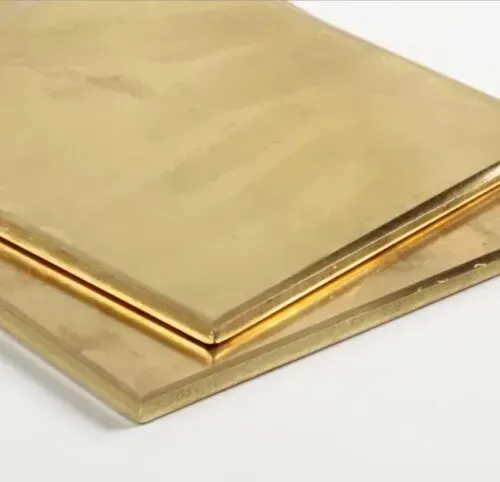
Brass plate earns its higher purchase price when a marine component needs corrosion resistance, machinability, conductivity, appearance or low-friction service, but it is rarely the right default for a hull or primary load-bearing structure. You will be able to match the alloy and fabrication job to the exposure, calculate the real replacement risk and request a plate quotation with evidence you can verify.
Key takeaways
- Use brass for fittings, wear surfaces and electrical parts—not primary hull structure.
- Match brass alloy and temper to corrosion, machining, forming and joining demands.
- Separate brass from aluminium and steel to reduce galvanic corrosion risk.
- Compare supplier quotes using alloy, dimensions, temper, test documents and inspection terms.
When brass plate pays for itself in marine fabrication
The query “are brass plates for worth buying in mumbai” has a practical answer: buy brass when its machinability, service life, appearance, conductivity or low-friction surface prevents more expensive replacement work. Do not use it as a substitute for approved shipbuilding steel or marine aluminium in hull plating, frames or other primary structural members.
| Marine-fabrication use | Why brass can pay back | When it becomes poor value |
|---|---|---|
| Nameplates, trim and exposed decorative fittings | Clean appearance and easy machining | Appearance alone cannot justify severe seawater exposure |
| Valve, pump and instrument parts; brackets, fasteners and liners | Accurate machining, corrosion resistance and reduced replacement work | The alloy is unsuitable for the water, bilge contamination or crevice conditions |
| Wear strips, electrical connections and busbars | Low friction or electrical conductivity can offset higher material cost | A cheaper material performs the same duty without added maintenance |
| Hull plating, frames and primary structure | Not an appropriate default structural choice | Use the approved structural material and scantlings |
Before treating any brass component as safety-critical, obtain approval against the vessel designer’s scantlings and the classification society’s material rules. For a sound purchase decision:
- Specify an alloy suited to the environment, not generic commercial brass.
- Price machining yield, isolation hardware and replacement lead time, not only kilograms.
- Check for galvanic contact with aluminium, steel or zinc-coated steel in seawater.
- Reject the plate when its higher cost brings no measurable service-life, maintenance or fabrication benefit.
How brass compares with the materials used in hulls and fittings
Brass is not a default hull material because its density is close to steel, while its strength-to-weight advantage is usually poor. Brass plates for shipbuilding suit selected fittings, not primary plating, frames or bulkheads.
| Material | Density and strength-to-weight | Corrosion behaviour | Fabrication and cost |
|---|---|---|---|
| Marine aluminium | About 2.7 g/cm³; excellent weight saving, lower absolute stiffness | Needs isolation from dissimilar metals; seawater pitting remains a concern | Good weight economy, but welding demands alloy-specific procedures |
| Ordinary brass | About 8.4–8.7 g/cm³; not automatically stronger than steel or bronze | Zinc loss and galvanic attack can undermine service life | Machines well but can make long, gummy chips; usually costs more than coated carbon steel |
| Naval brass | About 8.3–8.8 g/cm³; strength depends on grade and temper | Better defined alloy behaviour, not universal seawater immunity | Copper-alloy welding controls apply; alloy cost exceeds basic steel |
| Bronze | About 8.7–8.9 g/cm³; strong grades can outperform brass | Often strong seawater resistance, grade dependent | More difficult and expensive than steel in many jobs |
| Stainless steel | About 7.9–8.0 g/cm³; high strength in suitable grades | Crevices and chloride exposure can cause pitting or crevice corrosion | Welding needs grade control; material cost varies |
| Coated carbon steel | About 7.85 g/cm³; strong and economical structurally | Coating damage exposes steel to rapid corrosion | Familiar welding and lowest initial material cost in many hull applications |
Thin brass plate can distort during cutting or forming. Thermal cutting and welding require copper-alloy procedures, extraction and control of zinc-containing fumes; a steel welding procedure is not transferable.
“Naval brass” names C46400, not naval approval. Choose brass only for a component-level service after designer, owner and classification-society acceptance.
What Mumbai seawater exposure does to brass and its mating materials
Salt spray and immersion do not make every brass plate a marine-grade purchase. For brass plates for marine fabrication in Mumbai, stagnant water, bilge contamination, crevices, deposits and low-pH pockets can cause more damage than clean, moving seawater.
Chloride-bearing water can dezincify susceptible high-zinc brasses, including Muntz-type alloys. Zinc leaves a porous, copper-rich structure that may look sound while losing strength, so a shiny surface does not prove the plate is safe.
| Exposure or connection | Main risk | Purchase implication |
|---|---|---|
| Salt spray or immersion | General corrosion and dezincification | Confirm the alloy and inspect after service exposure |
| Crevices, deposits or stagnant water | Concentrated corrosion cells | Provide drainage and avoid water traps |
| Brass joined to aluminium, carbon steel, zinc-coated steel, stainless steel or bronze | Galvanic corrosion | Check the material pair and electrical path |
Galvanic attack becomes severe when a small anodic area is coupled to a much larger brass cathodic area. Use isolation pads and sleeves, compatible fasteners, sealed joints, drainage and protective coatings where suitable; do not let an exposed steel or aluminium edge feed corrosion beneath the brass.
Inspect joints, washers, edges and deposits instead of relying on nominal alloy selection. Check cleaning chemicals, cargo residues, industrial exhaust and enclosed spaces for ammonia or amines: these contaminants can promote stress-corrosion cracking in susceptible copper-zinc alloys, even when basic tensile results look acceptable.
A marine fabricator should reject an unqualified commercial brass exposed directly to aggressive seawater.
Which brass alloy, temper and fabrication condition should you choose
Order the UNS alloy, temper and product standard together; “marine brass plate” is not a complete specification. CZ108 (C26000) and CZ107 (C27000) are common copper-zinc grades, but chloride seawater, stagnant crevices and contamination require careful assessment because susceptible brasses can dezincify.
| Alloy | Typical reason for selection | Important limitation |
|---|---|---|
| C46400 naval brass | Copper-zinc-tin alloy for marine components | “Naval brass” does not prove naval approval |
| C44300 admiralty brass | Condenser and heat-exchanger applications | Confirm water chemistry, velocity and product form |
| C68700 aluminium brass | Seawater condensers and heat exchangers; aluminium improves resistance to erosion-corrosion and impingement | Suitability depends on velocity, temperature, entrained solids, water chemistry and whether it is plate, tube or another form |
Specify the UNS number instead of relying on “naval brass” as a sales label. Choose annealed plate when you must bend, flange or form it; cold-worked plate brings higher strength but lower ductility, more springback and greater cracking risk. Tell the supplier the required temper before cutting or forming.
Use ASTM B36/B36M when it covers the selected brass plate, sheet, strip or circle. For condenser, heat-exchanger or pressure-vessel service, ASTM B171/B171M or another alloy-specific standard may apply. Neither standard automatically grants classification-society approval. Confirm the exact alloy, temper, thickness, dimensional tolerances, flatness, surface condition, heat traceability and certificate requirements before ordering.
How to quote, inspect and compare a Mumbai brass plate supplier
Turn the marine drawing into a purchase specification before asking for a price. “Brass plate” alone leaves alloy, strength and corrosion risk unresolved.
- UNS alloy designation and temper
- Thickness, length, width, flatness, thickness tolerance and dimensional tolerances
- Surface condition and edge condition
- Quantity and cutting format
- Applicable test standard, such as ASTM B36/B36M or, where applicable, ASTM B171/B171M
- Required inspection documents
Ask a brass plate supplier in Mumbai such as R Mahaveerchandra & Co. for the heat or batch number, chemical-composition report, certificate of conformity, measured dimensions and traceability from each delivered plate to its certificate.
An EN 10204 3.1 certificate gives heat-specific chemical and mechanical results. It does not prove classification-society approval, a qualified weld procedure or compliance with the vessel design. Obtain class or owner acceptance separately for safety-critical work.
Compare the complete cost, not only the kilogram rate:
| Cost item | What to compare | Why it changes the decision |
|---|---|---|
| Machining yield | Finished parts from each plate | Scrap raises the effective material cost |
| Isolation hardware | Pads, sleeves and compatible fasteners | Galvanic attack can exceed the saving |
| Cutting | Cut charges and supplied format | Ready-to-use blanks reduce shop time |
| Order size | Minimum order and stock availability | Excess stock ties up cash |
| Quality control | Inspection effort and records | Missing traceability delays acceptance |
| Replacement risk | Lead time and rework after dezincification or galvanic attack | Cheap plate can become expensive downtime |
Require dimensional inspection before fabrication; a polished surface alone does not reveal crevice damage or dezincification.
Related product
 | Brass R. Mahaveerchandra & Co. R. Mahaveerchandra & Co. is a trusted supplier and stockist of premium quality Brass Plates designed to meet the... View product → |
Frequently asked questions
When do brass plates pay for themselves in marine fabrication?
Brass pays for itself when its machinability, service life, appearance, conductivity or low-friction surface avoids replacement and rework costs. It is not a substitute for approved shipbuilding steel or marine aluminium in hull plating, frames or primary structural members.
How does brass compare with hull and fitting materials?
Shipbuilding steel and marine aluminium suit primary hull structures when the design and approval process specifies them. Brass is better considered for selected fittings, wear surfaces, decorative work and conductive components, after checking strength, weight, corrosion and joining requirements.
What does Mumbai seawater exposure do to brass and mating materials?
Chlorides can accelerate dezincification in susceptible brasses, while contact with aluminium or steel can create galvanic corrosion. Specify a suitable alloy, electrically isolate dissimilar metals, control crevices and inspect exposed joints.
How should you choose a brass alloy, temper and fabrication condition?
Choose the alloy from the service exposure and fabrication process first, then select temper for forming, machining or strength. Confirm the plate condition, thickness tolerance, surface finish, heat-treatment status and test documents before production.
How should you compare a Mumbai brass plate supplier?
Request the exact alloy designation, temper, dimensions, tolerances, heat or batch number, inspection certificate and packing details. Compare the delivered specification and documentation, not only the price per kilogram.
Keywords